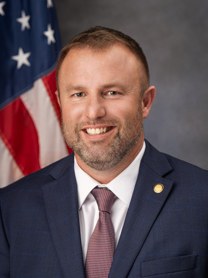
Jonathan Albert
Republican Party · Florida House, District 48
This candidate has been sent this cycle's questionnaire. We haven't received a response yet.
How to read this page
Voting records on this profile cover Jonathan Albert's service in the Florida House (the 2025 and 2026 legislative sessions).
Insurance coverage
No floor vote on this issue during the 2025 and 2026 sessions. We checked every bill filed in those sessions that cited Florida's autism insurance coverage law (ss. 627.6686 and 641.31098, F.S.), including bills that did not pass. CS/SB 756 (2025), which would have changed this law, passed the Senate but never received a House floor vote.
Source: Official records checked · View the law
Last checked 2026-09-23
Medicaid waiver
Voted yes on CS/CS/HB 1103 (2025), which required the Agency for Persons with Disabilities to publish the number of people in each waiver priority category, created a Statewide Family Care Council, and revised the pilot program for individuals with developmental disabilities. House third reading, April 23, 2025: passed 114-0; also voted yes on final House passage, May 1, 2025 (110-0). Became law as Chapter 2025-130.
Source: Official voting record · View official roll call
Last checked 2026-09-23Voted yes on the 2025-26 General Appropriations Act (SB 2500, 2025). This was the full state budget covering every area of state spending; this entry describes only its funding for the iBudget Home and Community Based Services Waiver, which pays for services for people with developmental disabilities, including autism. The budget passed by the Legislature included $973,806,676 in state general revenue and $10,296 in trust funds for the waiver (Specific Appropriation 242). Beginning with this budget, the waiver line holds only the state share, which the Agency for Persons with Disabilities transfers each quarter to the Agency for Health Care Administration; earlier budgets also listed federal trust funds in this line, so the totals are not directly comparable. The waiver line did not set aside a separate amount for enrolling people from the waiting list. Separately, the budget provided $35,321,574 in general revenue and $47,224,754 in trust funds for the pilot program for individuals with developmental disabilities (Specific Appropriation 218), which serves people from the waiver waiting list who choose to enroll, including $18,899,399 in general revenue and $25,268,395 in trust funds for additional enrollees. It also authorized the Agency for Persons with Disabilities to use waiver funds as needed so that individuals in crisis promptly begin receiving services. Final House vote on the conference report, June 16, 2025: passed 103-2. Became law as Chapter 2025-198.
Source: Official voting record · View official roll call
Last checked 2026-09-23Voted yes on CS/CS/HB 565 (2026), which revised the statutory definition of developmental disability, required level 2 background screening for employees of residential facilities and adult day training programs, and directed the Agency for Persons with Disabilities to conduct a gap analysis. House passage, March 3, 2026: passed 110-0. Became law as Chapter 2026-129.
Source: Official voting record · View official roll call
Last checked 2026-09-23Voted yes on the 2026-27 General Appropriations Act (HB 5001-E, passed in a May 2026 special session). This was the full state budget covering every area of state spending; this entry describes only its funding for the iBudget Home and Community Based Services Waiver, which pays for services for people with developmental disabilities, including autism. The budget passed by the Legislature included $1,018,538,080 in state general revenue for the waiver (Specific Appropriation 254). As in 2025-26, this line holds only the state share, so it is not directly comparable with budgets before 2025-26. Of that, $4,000,000 in general revenue and $6,000,000 in trust funds were provided to expand the waiver, and $10,040,746 in general revenue was held in reserve for a uniform iBudget provider rate increase. It also authorized the agency to use waiver funds as needed so that individuals in crisis promptly begin receiving services. Separately, the budget provided $62,389,784 in general revenue and $79,012,339 in trust funds for the pilot program for individuals with developmental disabilities (Specific Appropriation 230). Final House vote on the conference report, May 29, 2026: passed 99-6. Became law as Chapter 2026-232.
Source: Official voting record · View official roll call
Last checked 2026-09-23
Early intervention
Voted yes on CS/CS/SB 112 (2025), which created the Early Steps Extended Option (s. 391.3081, F.S.) and allowed the Cinotti Health Care Screening and Services Grant Program to fund screenings, referrals, and related services for autism. House passage, April 30, 2025: passed 113-0. Became law as Chapter 2025-95.
Source: Official voting record · View official roll call
Last checked 2026-09-23
School services
Voted yes on CS/HB 257 (2025), which would have required each district school board, except in fiscally constrained counties, to vote on whether to adopt a policy providing video cameras in self-contained exceptional student education classrooms at a parent's request. House passage, April 25, 2025: passed 106-0. The bill died in the Senate and did not become law.
Source: Official voting record · View official roll call
Last checked 2026-09-23Voted yes on CS/HB 447 (2025), the Evin B. Hartsell Act, which specified material to be included in public schools' disability history and awareness instruction. House passage, April 25, 2025: passed 107-0. Became law as Chapter 2025-49.
Source: Official voting record · View official roll call
Last checked 2026-09-24Voted yes on CS/HB 859 (2026), which would have required each district school board to adopt a policy providing video cameras in self-contained exceptional student education classrooms at a parent's request. House passage, February 25, 2026: passed 111-0. The bill died in the Senate and did not become law.
Source: Official voting record · View official roll call
Last checked 2026-09-24Voted yes on CS/CS/HB 1279 (2026). This was a catch-all education bill covering many unrelated topics; this entry describes only its special education provisions. It requires a school district to notify parents in writing or electronically within 10 school days when a related service in a student's IEP is not provided as scheduled, explain why, and discuss a plan for make-up services, and it gives parents the right to see service provider logs or progress notes within 15 school days of a service. House third reading, March 3, 2026: passed 84-25; also voted yes on final House passage, March 13, 2026 (81-16). Became law as Chapter 2026-59.
Source: Official voting record · View official roll call
Last checked 2026-09-23Voted yes on CS/CS/HB 615 (2026), which would have set timeframes for initial IEP evaluations and IEP team meetings, required notice to parents when an IEP-related service is not provided, and given parents access to service logs. House passage, March 4, 2026: passed 112-0. The bill itself died in the Senate; its IEP provisions were also included in CS/CS/HB 1279, which became law as Chapter 2026-59.
Source: Official voting record · View official roll call
Last checked 2026-09-24
Provider licensure
No floor vote on this issue during the 2025 and 2026 sessions. We checked every bill filed in those sessions that cited Florida's behavior analyst certification law (s. 393.17, F.S.), including bills that did not pass.
Source: Official records checked · View the law
Last checked 2026-09-23
Employment
Voted yes on CS/HB 915 (2026), which created the Working People with Disabilities program, allowing adults with disabilities who work to qualify for Medicaid coverage under specified income and asset limits. House passage, February 25, 2026: passed 115-0. Became law as Chapter 2026-88.
Source: Official voting record · View official roll call
Last checked 2026-09-24Voted yes on CS/CS/HB 1279 (2026). This was a catch-all education bill covering many unrelated topics; this entry describes only its vocational rehabilitation provisions. It requires vocational rehabilitation service providers to apply to, rather than simply register with, the Division of Vocational Rehabilitation, which must set minimum qualifications and an annual application period and publish an annual report; and it requires entities charging for services to people who are blind or visually impaired to disclose in writing whether the same services are available elsewhere at no cost. House third reading, March 3, 2026: passed 84-25; also voted yes on final House passage, March 13, 2026 (81-16). Became law as Chapter 2026-59.
Source: Official voting record · View official roll call
Last checked 2026-09-23
Guardianship
No floor vote on a policy bill on this issue during the 2025 and 2026 sessions. We checked every bill filed in those sessions that cited Florida's guardian advocate and supported decisionmaking laws (ss. 393.12, 709.2209, and 744.3201, F.S.), including bills that did not pass. The only one that reached a floor vote was SB 42 (2025), the Legislature's reviser's bill, which corrects and updates statute text across the Florida Statutes.
Source: Official records checked · View the law
Last checked 2026-09-23
First responders
Voted yes on CS/HB 1405 (2026), which revived Project Leo, a statewide project run through the Centers for Autism and Related Disabilities for missing persons with special needs, and provided appropriations. House passage, March 3, 2026: passed 109-0. Became law as Chapter 2026-172.
Source: Official voting record · View official roll call
Last checked 2026-09-24Voted yes on SB 418 (2026), which required an autism spectrum disorder training component for law enforcement officers (s. 943.1727, F.S.) and a Department of Highway Safety and Motor Vehicles communication envelope and card program for individuals with autism. House passage, March 10, 2026: passed 111-0. Became law as Chapter 2026-147.
Source: Official voting record · View official roll call
Last checked 2026-09-23
Autism, in their own words
Statements where the candidate directly addresses autism, quoted in their own words. We do not rate or interpret them.
Research pending. We haven't finished checking official records for this issue yet.
Source: Research pending, 2026 pilot sourcing not yet complete